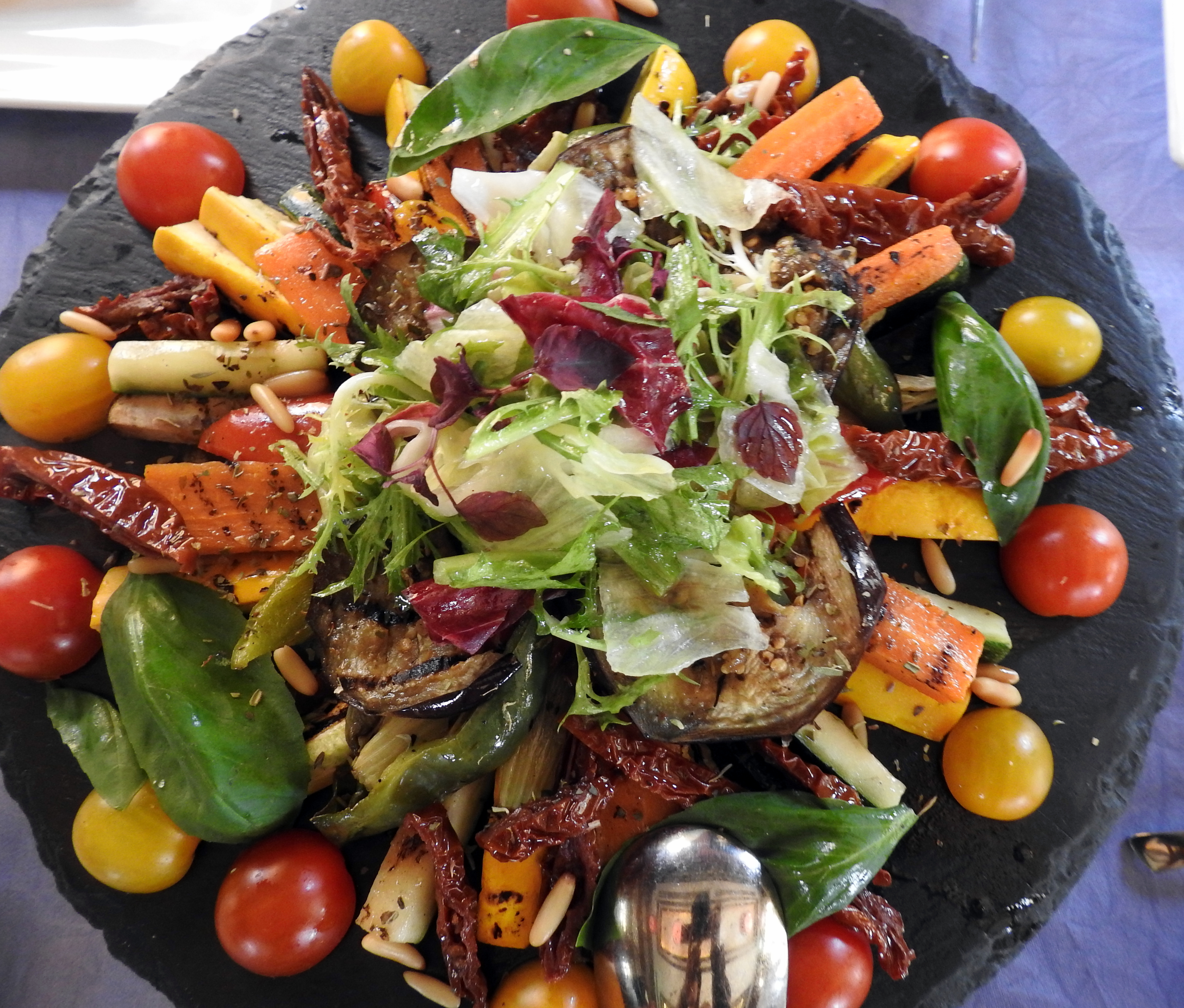
For a long time, Bangalore’s vegetarian dining landscape was fairly limited, either rooted firmly in regional cuisine, or accessible only through luxury or premium fine dining spaces where global vegetarian food existed as a niche offering. That is now changing. The industry has begun to recognise vegetarian and vegan food as a serious, growing market with depth and opportunity. What we’re seeing today isn’t innovation for novelty’s sake, but a more mature understanding of vegetarian food as a cuisine in its own right. There’s deeper thinking around ingredients, provenance, and technique.
The question for chefs is how to bring out the best from the produce available to us. The process revolves around seasonality, texture, temperature, and depth of flavour—using techniques like roasting, ageing, fermenting, slow reductions, and smart fat usage. The goal is satisfaction, not novelty: a good vegetarian plate should feel complete, indulgent, and memorable, without announcing that it’s trying too hard.
The starting point is always respect, for the ingredient and for the diner. In a fine dining vegetarian space, the challenge is not to compensate for the absence of meat, but to remove that comparison altogether.
Progressive vegetarian cuisine isn’t about gimmicks or faking meat. It’s about evolving how we look and use produce. It’s also about respecting age old techniques while also looking at modern applications. It’s storytelling, it’s presentation but mostly It’s about making the familiar more exciting.
Progressive vegetarian cuisine is rooted in clarity and evolution. It respects tradition but isn’t bound by it. It asks how we move forward without losing meaning. At its core, it’s about pushing technique, presentation, and storytelling while staying honest to ingredients. Familiar flavours are re-contextualised so diners recognise them emotionally but experience them in a new way.
Rather than Indian flavours being adapted to global formats, global dishes are being interpreted through an Indian lens. The idea is to respect the integrity of the original dish, it should still taste like the cuisine it comes from but make it more intuitive and palatable for an Indian audience. Indian flavours, sensibilities, and comfort levels naturally inform seasoning, balance, and texture. This approach allows diners to explore global vegetarian food without feeling alienated by it. The influence is subtle and intentional, ensuring the dish feels familiar enough to be comforting, yet distinct enough to feel new.
At the heart of this shift is the diner. Every decision from menu design to flavour balance to the overall experience is driven by how the customer feels at the table. The focus today is on creating food that people can connect with, return to, and remember, not food that exists to prove a point. When experiences are built around the customer it naturally becomes more inclusive, more confident, and more meaningful. And that’s where the future of dining truly lies.
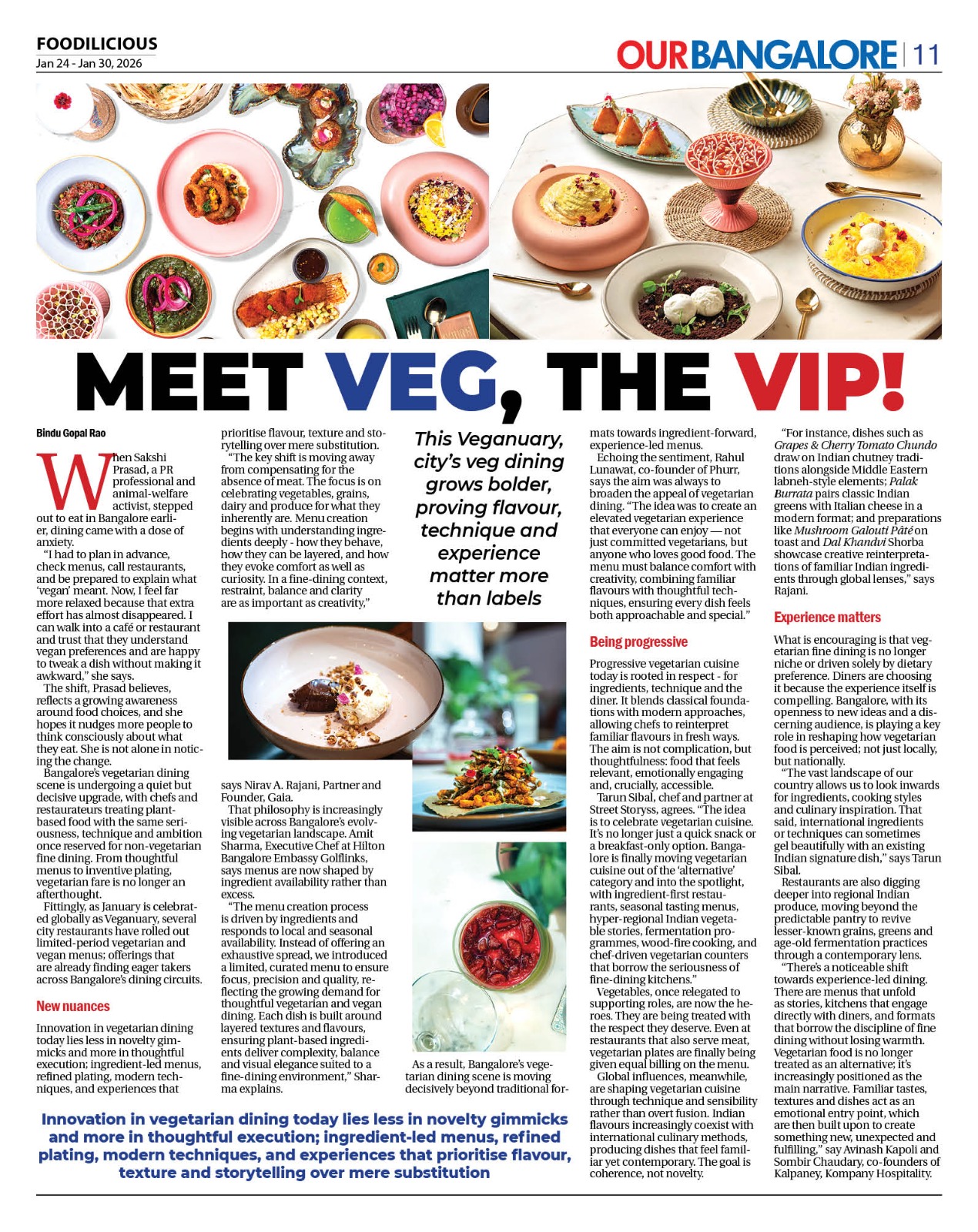
Read the full story that first appeared in Our Bangalore dated Jan 24-30, 2026 here:

Leave a Reply