
Indian homes were historically designed to display permanence large beds, heavy sofas, oversized storage. Today’s homeowners are more aware of how they actually live. They’re asking better questions: Do I need this much? Will this serve me every day? Functionality is no longer seen as compromise; it’s becoming a mark of intelligent living.
At The Artful Abode, we believe technology should quietly support design, not dominate it. The most successful innovations are those you stop noticing after the first few days of living with them.
There is a noticeable shift. Earlier, furniture was often viewed as a statement of scale and status. Today’s urban consumer is far more aware of how space functions daily. The focus has moved from sheer size to usability, movement flow, and long-term practicality.
Balance comes from restraint. In compact homes, excess detail or overly delicate finishes don’t age well. We focus on ergonomics first, how a body sits, moves, rests. Then durability materials that can handle daily use without constant maintenance. Aesthetics follow naturally when these two are resolved honestly. Comfort is felt, durability is trusted, and beauty becomes quiet rather than performative.
Technology has made furniture more adaptable, but it must be used with discretion. Modular systems and smart mechanisms are powerful tools, but only when they enhance ease—not complexity.
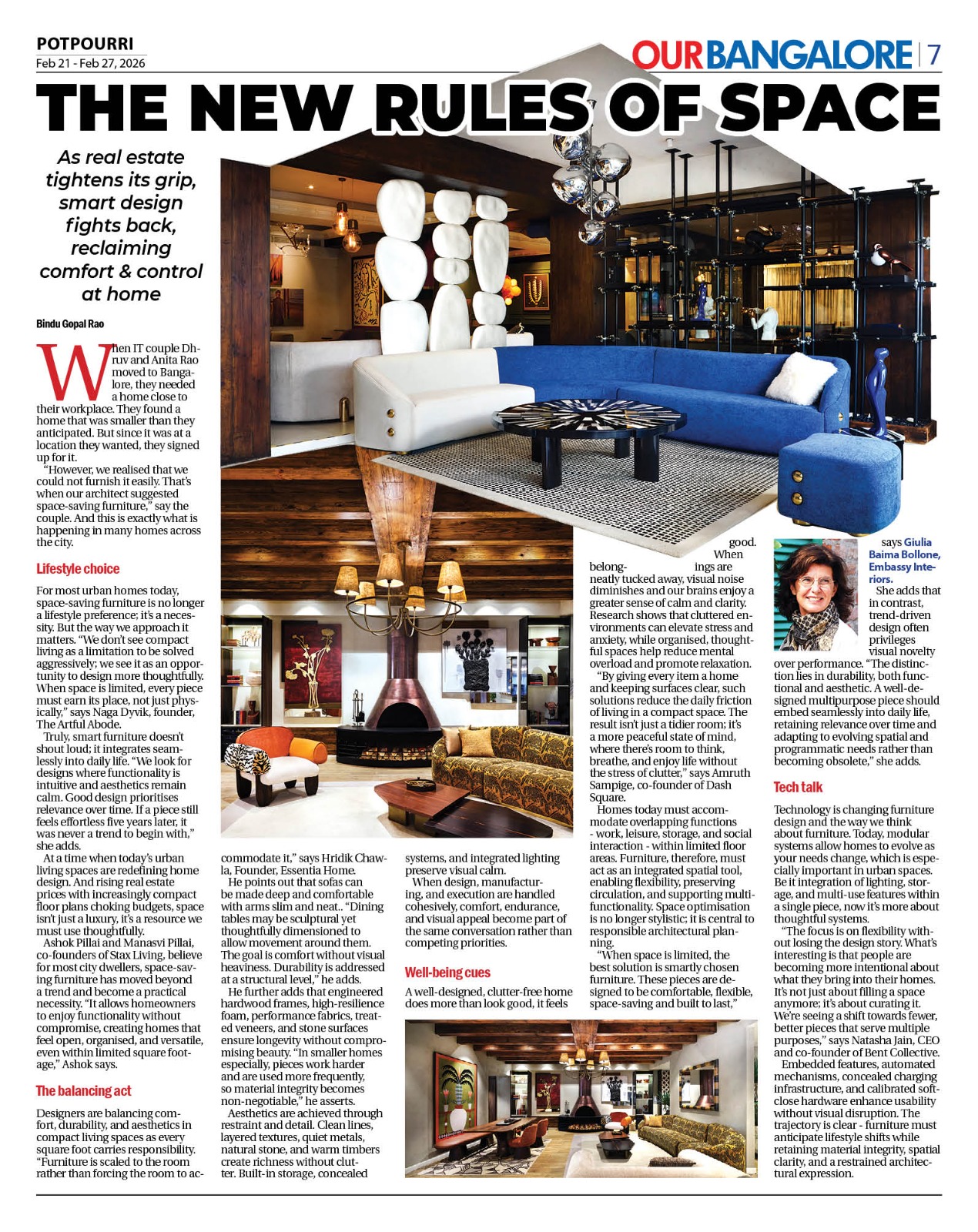
Read the full story that first appeared in Our Bangalore dated Feb 21-27, 2026 here:

Leave a Reply