
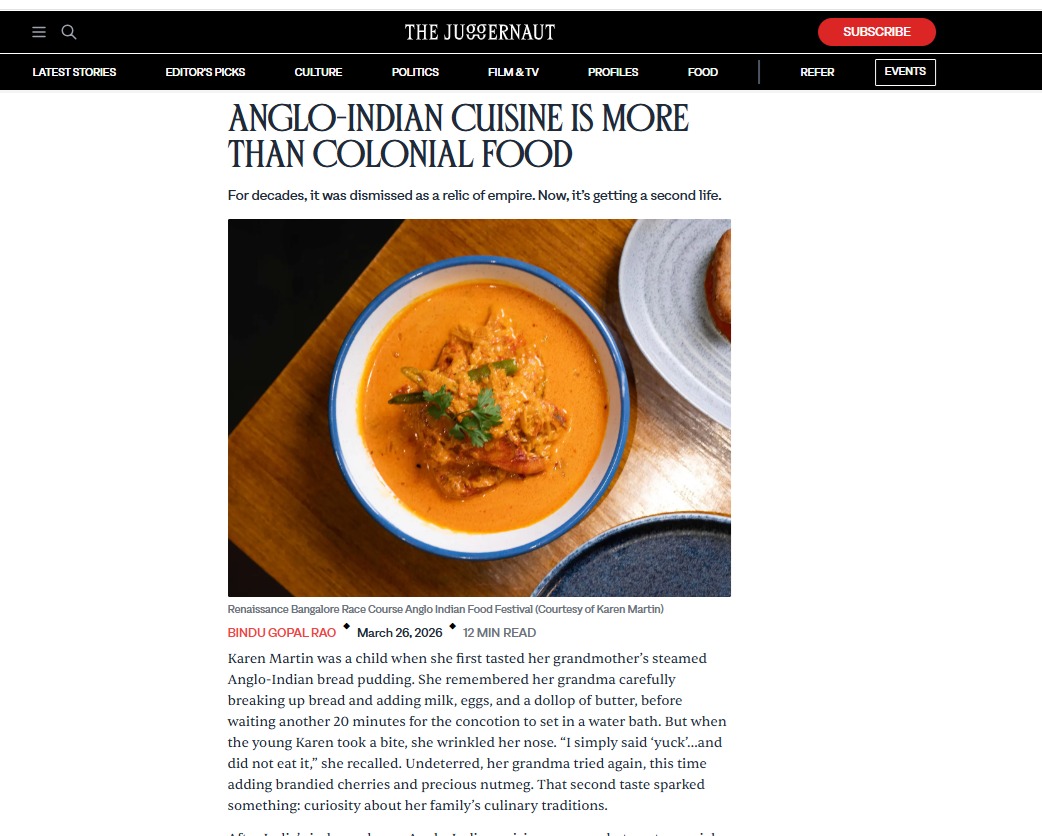
Anglo-Indian cuisine is often misunderstood as “colonial food,” but it is actually a cuisine of resilience and identity. After Independence, many Anglo-Indian families migrated, yet recipes survived in handwritten diaries. It exists quietly — confident in its mixed heritage. For India, it represents coexistence. Two cultures sharing one kitchen.
Anglo-Indian cuisine has clear identity markers:
- Tangy, structured gravies like Railway Mutton Curry
- Festive favorites such as Ball Curry
- Colonial-influenced dishes like Country Captain Chicken
- Adapted classics like Mulligatawny Soup
- Comfort bites such as Devilled Eggs
It is home-style, deeply personal, and built around community tables rather than restaurant theatrics.
Today’s chefs are not reinventing Anglo-Indian cuisine; they are refining it.
- Using organic, single-origin spices instead of commercial curry powders
- Choosing free-range meats for cleaner flavour in slow braises
- Incorporating artisanal vinegars like coconut toddy or palm vinegar
- Introducing smoked local fish in dishes like Kedgeree
- Presenting classics with lighter plating but unchanged soul
The evolution is about quality and sustainability, not trend.
The nuance lies in harmony:
- Indian spices, but gently layered
- European cooking techniques, adapted to Indian produce
- Preservation through vinegar, bottling, and pickling
It is a cuisine built on adaptation and dignity.
Read the full story that first appeared in The Juggernaut here: (email required)
A PDF is here:

Leave a Reply